
Subtotal $0.00 Subtotal: $0.00

In today’s digital-first era, having a strong law firm website isn’t just an option—it’s essential for success. Your site serves as the foundation to secure and convert leads into paying clients, making website design a critical investment for attorneys and law firms alike.
A well-crafted website delivers a professional look and feel while ensuring easy navigation, high speed, and exceptional online customer service that keeps potential clients engaged. The journey involves strategically building, maintaining, and marketing your digital platform using the right tools and approaches.
This overview explores the benefits of effective design, highlights key differences between DIY and third-party web design solutions, and provides actionable tips for building and marketing a website that truly converts.
How Does Attorney Website Design Benefit My Firm
Effective website design helps law firms communicate clearly about their services while driving client leads and boosting conversions through strategic website development.
The three key benefits of investing in professional design extend far beyond aesthetics—they directly impact your bottom line and reputation in ways that traditional marketing cannot match.
1- Standing Out in a Crowded Legal Marketplace
When competing against similar firms in your area, prospective clients need to see why you’re the best person for the job—and a well-built, maintained web design makes that difference. Features like useful, relevant content and a blog written by attorneys at your firm instill confidence while naturally increasing leads through genuine value delivery.
For example, when someone performs a Google search , sees your firm’s content, reads it, and values the guidance related to your practice, they become far more likely to reach out for a consultation. This strategic position as a trusted source transforms your site into more than just a digital business card—it becomes the reason clients choose you.
Turning Online Reputation Into Client Acquisition
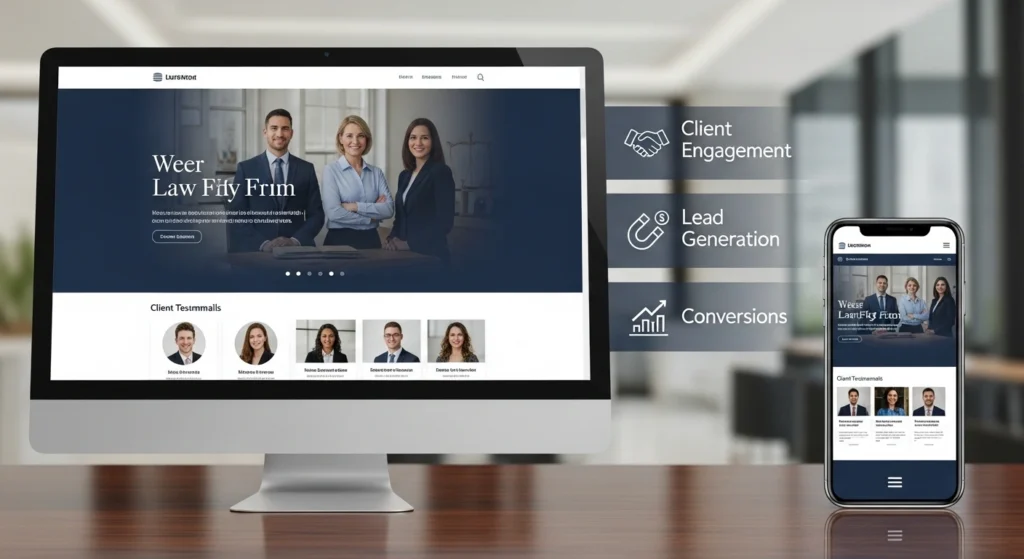
When people are considering a legal service, the first place they usually begin their research is with online reviews—making reputation management a critical part of lawyer website development. Good design features regular client review in a variety of formats, which include both video and written quotes that showcase real experiences.
Your firm should consider devoting a dedicated staffer to monitor platforms like Yelp and Google review sites, then respond to all reviews (negative ones) as essential customer service. Regularly monitoring reviews helps uncover critical pain points you can fix. In the long run, this proactive approach enhances your firm’s reputation while building confidence that your attorneys are the best fit for their legal needs.
Making Client Engagement Effortless and Effective
Well-designed websites for attorneys must be intuitive and easy to use while they offer modern tools that simplify asking questions, setting initial consultations, and booking appointments without friction.
Aside from having a compelling homepage about your practice and a functional contact page, integrating modern software communication tools can dramatically increase lead conversions through seamless interaction.
For example, an AI chatbot provides an excellent way for clients to receive answers to basic questions instantly. When questions become more technical, the AI can smoothly transfer the client to a human staffer on your firm’s team for personalized assistance.
Choosing the Right Path for Your Law Office Web Design
Understanding the pros and cons of who constructs and manages the performance of your law firm website development can make or break your online success. Designing a law firm website on your own is typically more affordable but proves incredibly time-consuming since you’ll need to learn, build, and manage the site yourself.
Software tools like WordPress and Lawlytics provide easy tutorials, reliable customer service, and professional templates for designing your website at a reasonable price. However, you must consider the ongoing cost of regularly managing updates and performance issues.
This responsibility often translates into hiring a dedicated marketing staff member or freelancer, which can cost significantly more in the long run than initially anticipated.
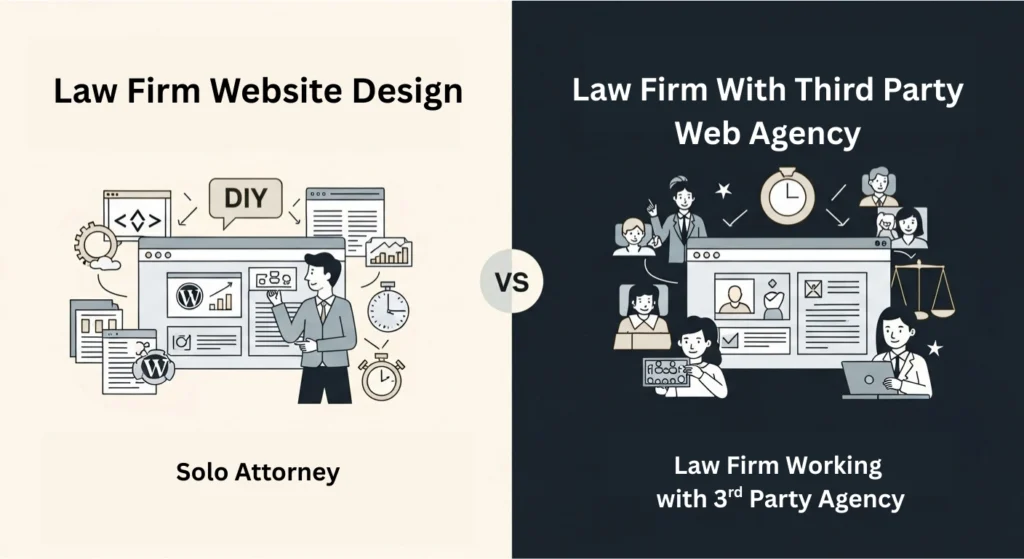
Hiring a third-party agency or specialized service for website development for law firms is usually more expensive altogether. Still, it allows your firm’s staff and attorneys to devote their entire time to casework rather than technical concerns.
The caveat is that you’ll still need to carve out time for communicating any updates or needs with the third-party service. If it’s an agency you decide to hire, they may take longer to provide updates since they’re servicing multiple clients simultaneously.
If you’re a small agency, consider designing the site independently. You can always hire an expert freelancer or add marketing staff if it becomes too heavy to maintain over time.
However, if your agency is bigger, your best bet is to allow a third party to build and manage the entire site while you focus on the core operations and legal work of your firm.
Essential Tips for Website Development for Law Firms
1. Build Essential Web Pages
Beyond displaying basic information like your firm name, address, location, and phone numbers, effective websites for lawyers must serve as an easy source where prospects can quickly learn about your firm, ask initial questions, and book a consultation seamlessly.
Throughout law firm website development and ongoing maintenance, your site needs the following key web pages: a powerful homepage explaining how and why your firm is the best choice while showcasing practice areas, an about us page featuring each attorney and staff member, a testimonials page displaying client quotes and videos, a blog built from a strategic content plan focused on lead generation and conversions, plus a contact page with the ability to chat easily, email, and book appointments.
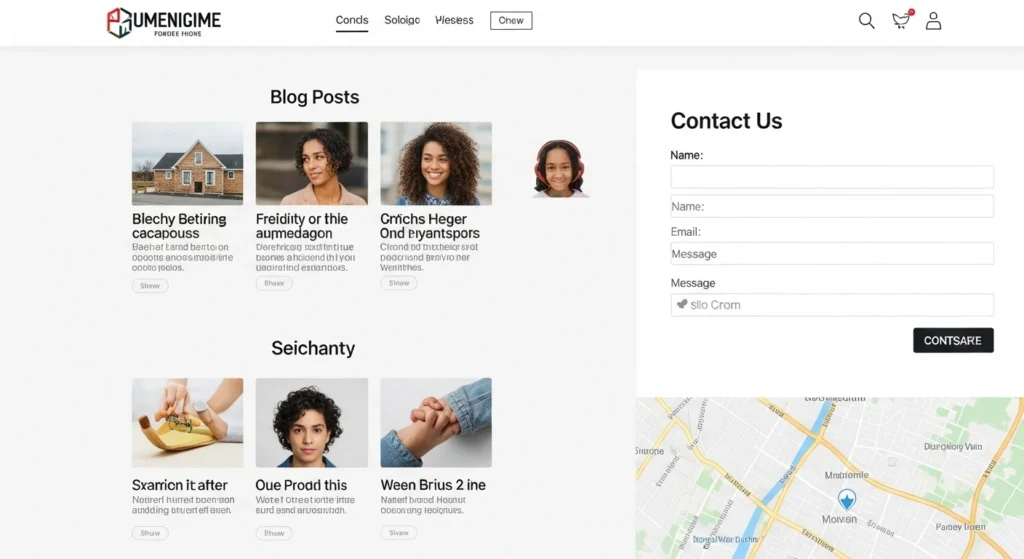
These pages form the basis of optimum law office web design and must receive regular maintenance and updates—for example, when your firm expands its practice areas, issue an update as soon as possible to avoid losing valuable lead opportunities, or when you hire a new attorney or staff member, immediately post their background on the about us page (the same applies when an attorney or staff member quits.
Finally, updating your blog with fresh law firm website content featuring good SEO twice or more per week can help your firm show up in Google searches as often as possible.
The key takeaway: don’t wait months to refresh your site—the best lawyer websites feature regular updates and maintenance to position your firm against competitors and maximize leads and conversions.
Check out our go-to handbook on law firm digital marketing strategy for a more in-depth marketing plan that covers everything from content creation to client acquisition strategies.
2- Put Yourself in Your Client’s Shoe
When someone visits your law firm website, they’re not looking for another courtroom drama or sensationalized ads—they want a real person who can help them. I’ve seen countless attorneys lose potential clients simply because their website development focused on impressing other lawyers instead of connecting with actual people who need legal writing assistance.
The first three things a visitor notices should immediately build trust: professional headshots that show your staff as approachable humans, an about us page with a brief explanation of what specifically makes your practice different, and clear information about how you’ve helped others facing similar challenges.
Think about it—when a reader lands on your site after searching for a personal injury attorney, they’re often stressed and uncertain, so humanizing your practice through community activities, photos or short videos showing your team in action creates instant rapport that no generic stock image ever could.
Your law firm website content needs to speak directly to the problems your potential client faces right now. If your firm specializes in personal injury cases, don’t just list your credentials—write blog articles and blog post entries that address real situations, like what to do after a dog bite or how to document an injury scene properly.
This approach comes into practice when you consistently produce rich content following best practices that position your firm as a credible source while generating organic traffic. I’ve shown attorneys how maintaining a steady stream of helpful resources not only assists people immediately but also presents your firm as one that genuinely cares, which naturally leads to more consultation bookings.
When visitors enjoy finding answers on your site and see you’ve helped others specifically with cases like theirs, they’ll hire you because your website earns their trust through authenticity rather than just doing a sales job—and that’s what sustaining a successful practice is really about.
3- Integrate User-Friendly Desktop and Mobile Navigation
When we first launched a law firm website for our client, we made the mistake of designing it purely from my desktop perspective—and watching our mobile traffic suffer was a wake-up call we never forget.
Your digital-first impression on potential clients hinges on easy navigation across every device, and in today’s landscape, mobile-friendly design isn’t optional—it’s a crucial element of modern website design.
Visitors using smartphones and mobile devices to conduct research before making purchases or hiring decisions won’t tolerate a website that loads as just a tiny version of what lawyers built for larger screens.

Good website design demands seamless navigation that lets site visitors quickly find key web pages like your about us, blog, testimonials, and service tabs without frustration. Equally important is technical maintenance—those broken links, missing images, 404 error pages, web glitches, software glitches, and technical hiccups act as an immediate turn-off that sends traffic fleeing to competitors, directly impacting your firm’s leads.
We’ve learned through experience that mobile development must be prioritized alongside desktop optimization, because consumers expect flawless functionality whether they’re browsing from their office computer or scrolling during their morning commute. Any friction in that experience costs you clients, before they ever pick up the phone.
4- Monitor Site Speed
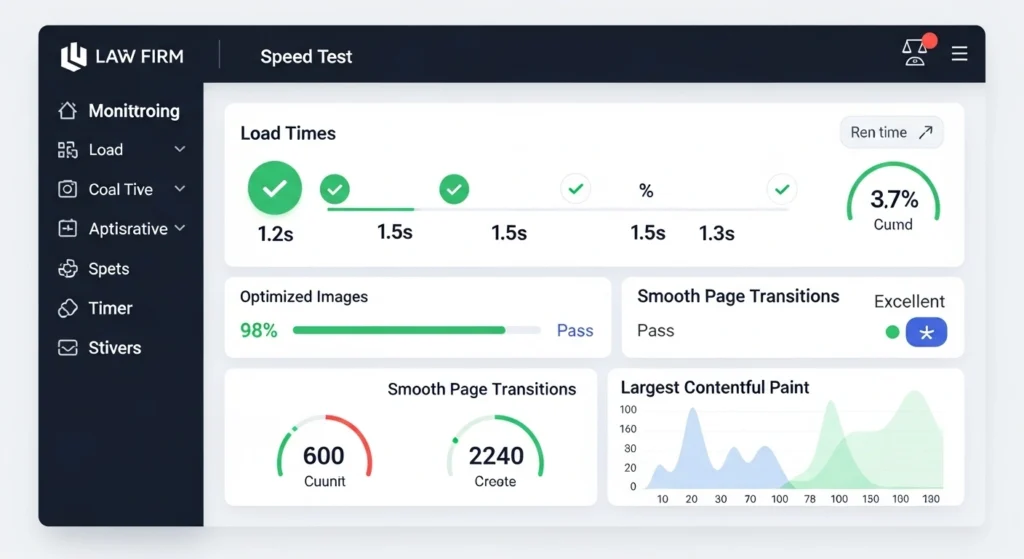
We’ve watched countless potential lead opportunities vanish because law firms underestimate how slow load times and lags can destroy conversions. There’s nothing more frustrating than seeing visitors stuck on load screens only to leave your site and never return.
Good web design demands that your website’s pages, interactive law firm website content, images, video, and all interactive components load in three seconds or less, because anything beyond that threshold will affect user experience and directly issue a death sentence to your conversion rates. From my years of experience, I cannot stress enough the importance of technical maintenance that includes a monthly report tracking how well your pages are loading and identifying any issues before they compound into bigger problems.
Hiring an expert who can monitor your website’s speed and easily fix glitches ensures your site runs at peak performance at all times, which is why we always recommend incorporating website maintenance and auditing into your routine—check out resources like the ultimate marketing checklist for law firm success to build a comprehensive strategy that keeps your digital presence competitive and responsive.
Ready to Transform Your Legal Practice Online?
After working with countless law firm clients over the years, we’ve seen firsthand how the right website design company for lawyers transforms a practice. Whether you’re juggling small firms or steering large firms, here’s the real deal: a killer custom website isn’t just nice to have, it’s essential.
Our experienced team knows exactly how to help your firm maximize lead generation and conversion rates that actually move the needle. We’re talking SEO friendly, mobile-optimized design that’s laser-focused on maximizing leads – because what’s the point otherwise?
What really gets me excited about website design for lawyers is the one-on-one consultation approach. You get easy custom setup, real answers to your questions, and ongoing support that doesn’t vanish after launch.
You can rest assured your site runs at its absolute best. The cherry on top? Our services include integration that integrates seamlessly with legal case management software for optimum productivity. That’s when you know you’ve got a partner, not just a vendor – real support when it counts.
FAQ’S About Law Office Web Design
Is website design really difficult for lawyers and law firms due to legal issues? Why?
Yes, law firm websites must comply with bar association advertising rules, which vary by state. Common challenges include avoiding guarantees about outcomes, including proper disclaimers, accurately representing credentials, and meeting ADA accessibility standards.
Why is a law firm’s website more important than its physical office?
Most potential clients research lawyers online first. Your website is your 24/7 digital office that reaches thousands of users, while your physical office only serves clients who’ve already decided to hire you.
What are the key design principles for a law firm website?
Professional appearance, clear navigation, mobile-friendly design, fast loading speed, prominent contact information, and easy-to-read content without excessive legal jargon.
Why are client testimonials and case studies important for a law firm’s website?
They build trust by showing real results and client satisfaction. People want proof you’ve successfully handled cases like theirs before hiring you.
What are the advantages of hiring a professional website design company?
Professionals ensure your site is visually appealing, mobile-optimized, fast-loading, SEO-ready, and compliant with legal advertising rules while you focus on practicing law.
